
Protecting critical production environments and human health requires more than just dust filtration. Discover how advanced molecular filtration technology ensures safety and efficiency in modern manufacturing.
Overcoming the Invisible Threat of Molecular Contaminants
In the modern industrial landscape, traditional mechanical filters often fall short when dealing with gaseous pollutants. Many facility managers face the persistent challenge of equipment corrosion, product yield loss, and health risks caused by Airborne Molecular Contaminants (AMCs) and Volatile Organic Compounds (VOCs). These invisible threats can penetrate standard HEPA systems, leading to significant downtime and operational costs.
The core question for many engineers is: How can we effectively neutralize these gases without compromising airflow or energy efficiency? This is where a specialized Chemical Filter becomes an indispensable asset. At RZj Clear Air, we provide strategic solutions that transform air quality management from a reactive chore into a proactive competitive advantage.
In this comprehensive guide, you will learn the technical foundations of molecular filtration, the strategic differences between various filter configurations, and how to select the optimal solution for your specific industry requirements.
The Fundamentals of Chemical Filter Technology
What is a Chemical Filter?
Unlike particulate filters that trap solid particles through physical interception, a Chemical Filter utilizes the principle of adsorption or chemisorption. By using specially treated media—often activated carbon or ion-exchange resins—it captures gaseous molecules such as acids, bases, and organic vapors.
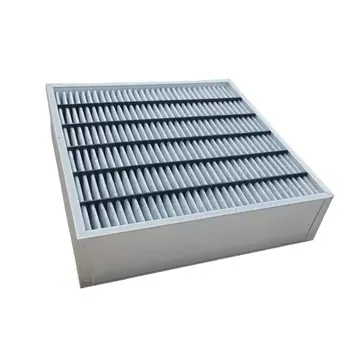
Understanding AMC (Airborne Molecular Contamination) is critical for semiconductor and pharmaceutical sectors. These contaminants are categorized into acids, bases, organics, and dopants. Each category requires a specific impregnated media to ensure complete neutralization, as detailed in our analysis of what is AMC.
Advanced Solutions for Critical Industrial Applications
Selecting the right configuration is a balance of efficiency, pressure drop, and service life. Based on our extensive experience serving high-tech manufacturing plants, we categorize chemical filtration into three primary approaches:
Acid and Base Removal
Ideal for wafer fabrication and chemical processing where corrosive gases can damage sensitive electronics. Our acid removal filters use impregnated media to chemically bond with corrosive molecules.
VOC and Odor Control
Using high-grade activated carbon, these filters are essential for commercial HVAC and solvent-heavy environments. The carbon cloth chemical filter provides a high surface area for rapid adsorption.
V-Bank Configurations
For large-scale air handling units (AHUs), the V-Bank filter offers a larger filtration area, allowing for higher airflow rates with minimal resistance.
Choosing the Right Media: A Step-by-Step Guide
To ensure your Chemical Filter performs optimally, follow this professional selection process:
Identify the Pollutant: Conduct air quality testing to determine if you are dealing with organic vapors (VOCs) or inorganic gases (H2S, NH3).
Determine Concentration: High concentrations may require multi-stage filtration, including a pleated panel pre-filter to protect the chemical media.
Analyze Flow Dynamics: Consider the Face Velocity. If the air moves too fast, the contact time with the media might be insufficient for chemical reactions.
Why Trust RZj Clear Air for Your Filtration Needs?
At RZj Clear Air, we don't just supply products; we provide engineered security. Our commitment to excellence is reflected in our participation in major industry events, such as the Semiconductor Clean Technology Summit.
Quality and Compliance
Every Chemical Filter we produce undergoes rigorous testing to meet international standards. We utilize advanced materials like honeycomb activated carbon and composite fiber structures to ensure maximum removal efficiency and durability.
Customization Expertise
We understand that no two processing plants are the same. Our technical team specializes in tailoring filter specifications—from frame material (aluminum, plastic, or galvanized steel) to specific chemical impregnations—to match your unique environment.
Frequently Asked Questions
Q: How often should I replace my Chemical Filter?
A: The lifespan depends on the gas concentration and airflow. Typically, we recommend monitoring the breakthrough concentration or scheduling replacements every 6 to 12 months for standard industrial applications.
Q: Can your filters be used as compatible replacements for other brands?
A: Yes. RZj Clear Air manufactures high-quality compatible replacement filters for major brands, including Levoit, Philips, and Blueair, ensuring seamless integration and comparable performance.
Q: Are these filters suitable for high-temperature environments?
A: We offer specialized high-temperature resistant filters designed to maintain integrity in demanding industrial exhaust systems.
Elevate Your Cleanroom Standards Today
Don't let chemical contaminants jeopardize your production yields or worker safety. Trust the expertise of RZj Clear Air to deliver the precision filtration your facility deserves.